|
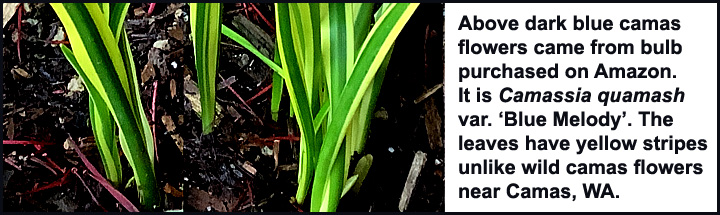
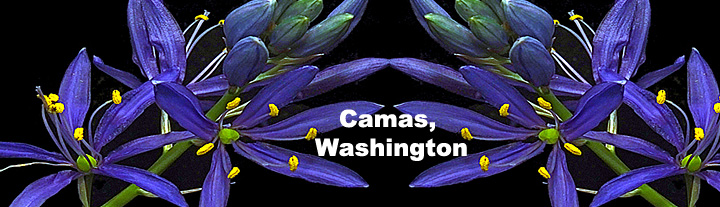
| The lovely town of Camas is named after the "Camas Lily" (Camassia quamash), a beautiful blue wildflower of the Pacific northwest. Camas bulbs were an important food source for many Native American tribes. These bulbs, which could be used as a vegetable or in bread, often saved tribes from starvation. They are very important plants in the history of this region, including the Lewis & Clark expedition. For more information please visit Camas Page 1 at above URL. |
| The following images were taken on a Southwest Airlines flight to Portland, Oregon and tour of Columbia River Gorge & vicinity conducted by Alcantar Travel during July 20-26, 2025. Brief captions are shown below each image.
|
 |
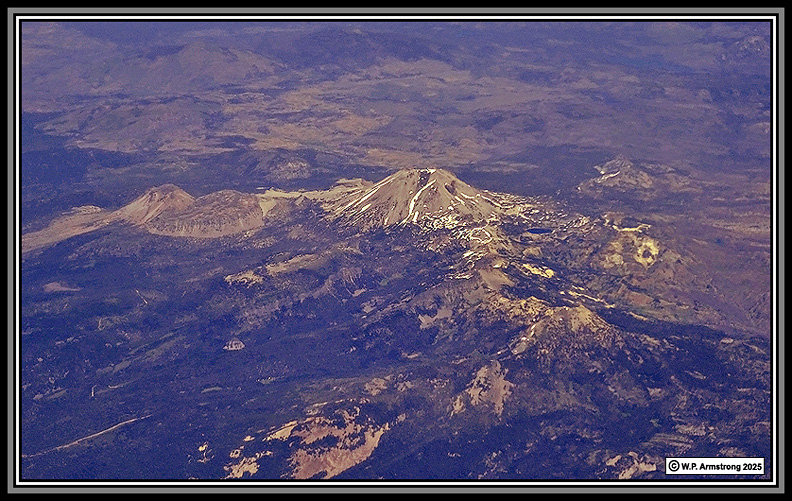
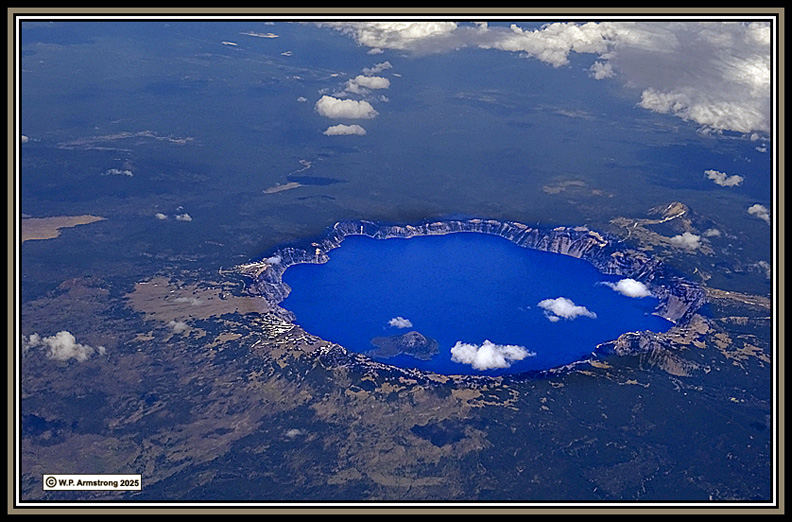
Aerial Views Out The Window Of Southwest Airlines Boeing 737 |
|
Mt. Shasta & the smaller Shastina on the left.
|
|
Crater Lake, Oregon.
|
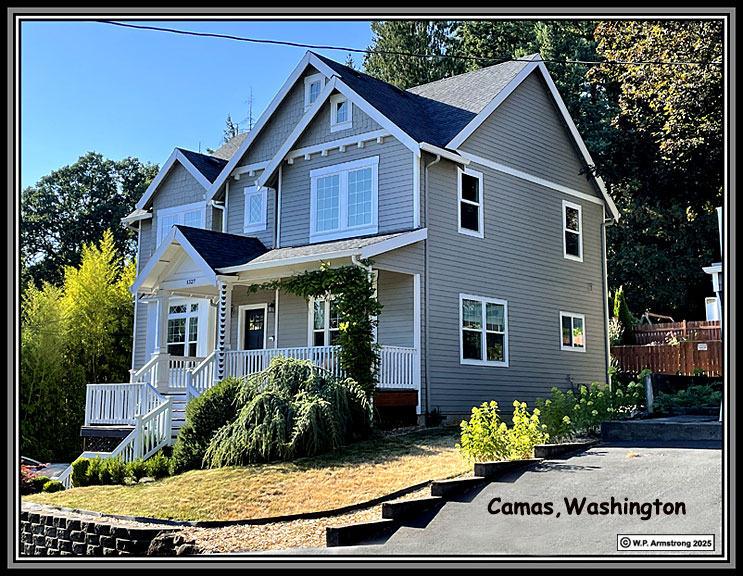
|
Residence of Our Tour Guide Team.
|
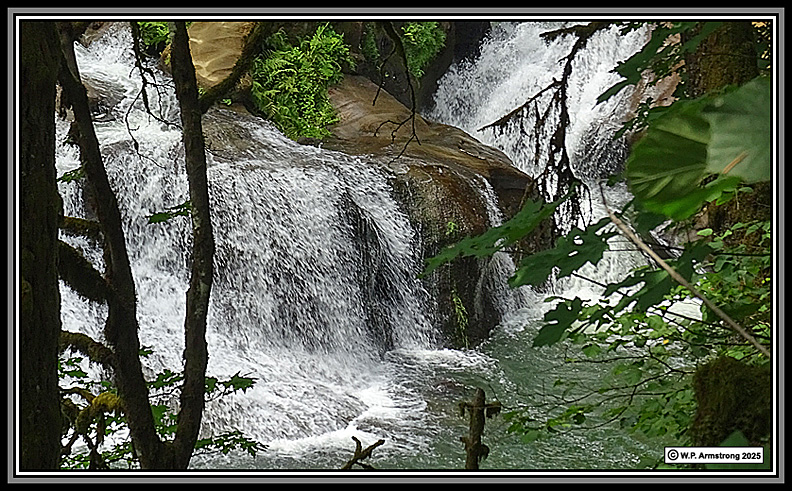
|
Waterfalls at Nearby Lacamas Lake Heritage Trail.
|
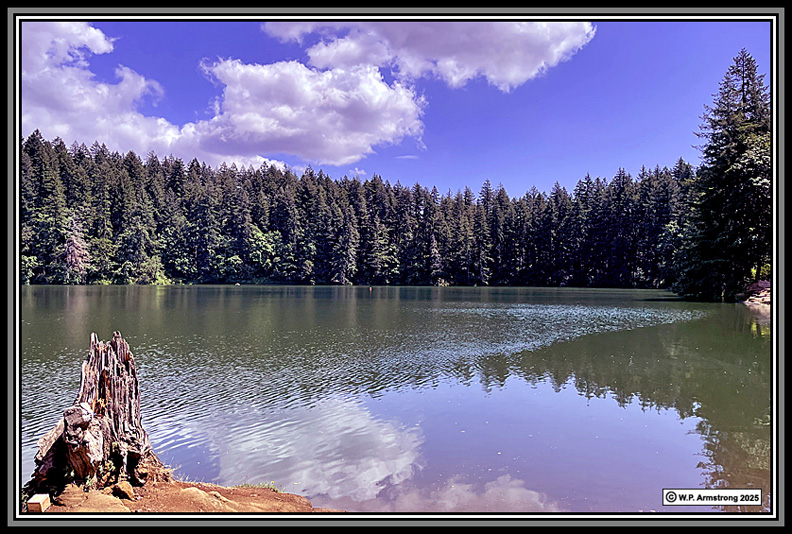
|
View From Lacamas Lake Heritage Trail.
|
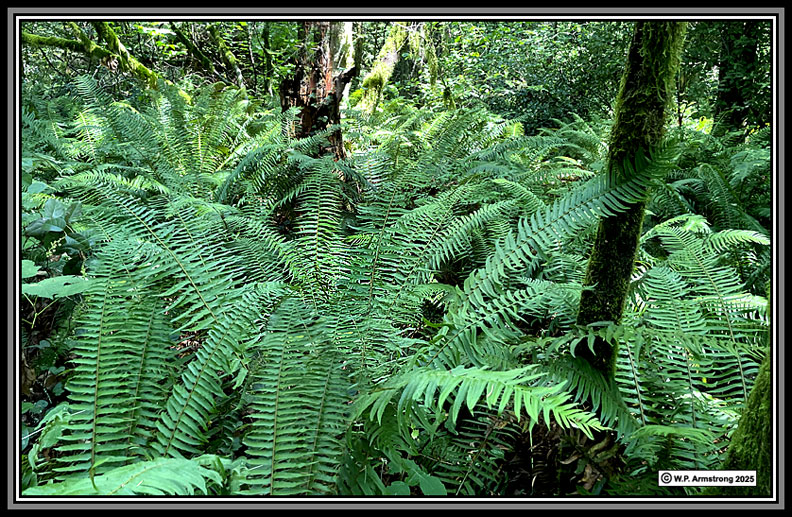
|
Sword Ferns (Polystichum munitum) Along Trail.
|
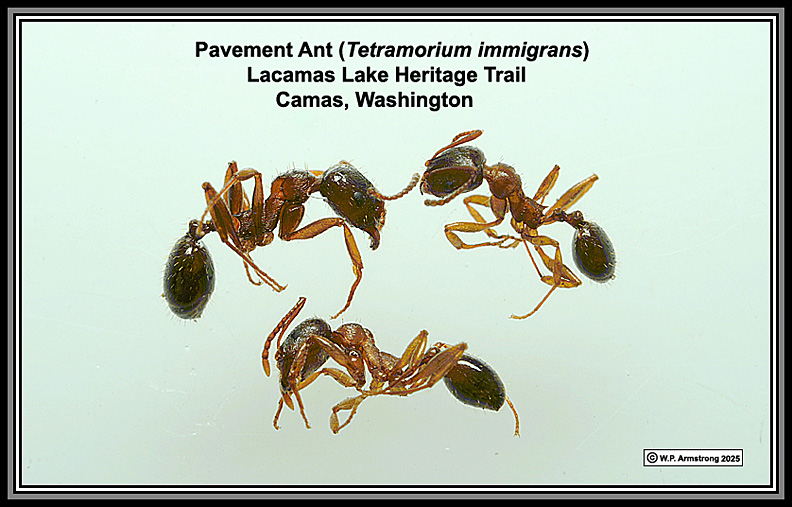
|
Pavement ants (Tetramorium immigrans) on trail. Introduced from Europe.
|
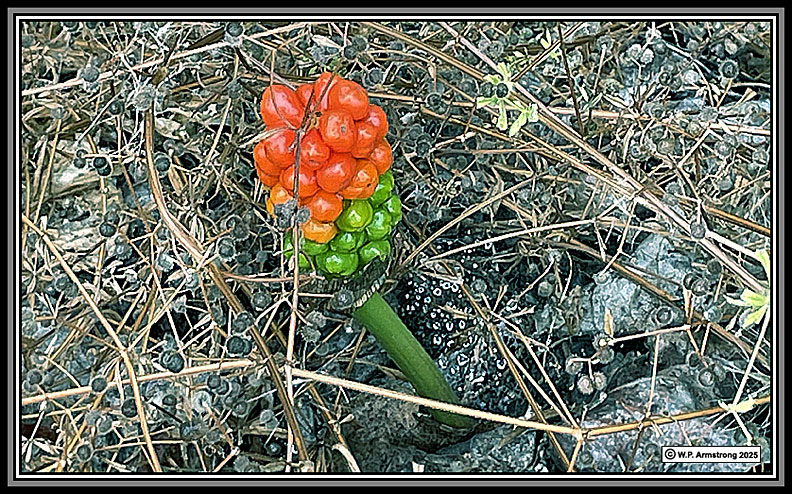
| Fruiting stalk of "Lords & Ladies" (Arum italicum). This interesting relative of calla lilies is native to the British Isles & Mediterranean region. It belongs to the arum family (Araceae) that now includes my tiny duckweeds (Wolffia & Lemna) because of their similar DNA. It was photographed on trail along Columbia river near Washougal Waterfront Park. The minute cup-shaped structures on ground beneath Arum are bird's-nest fungi. They are out of focus due to insufficient depth of field. |
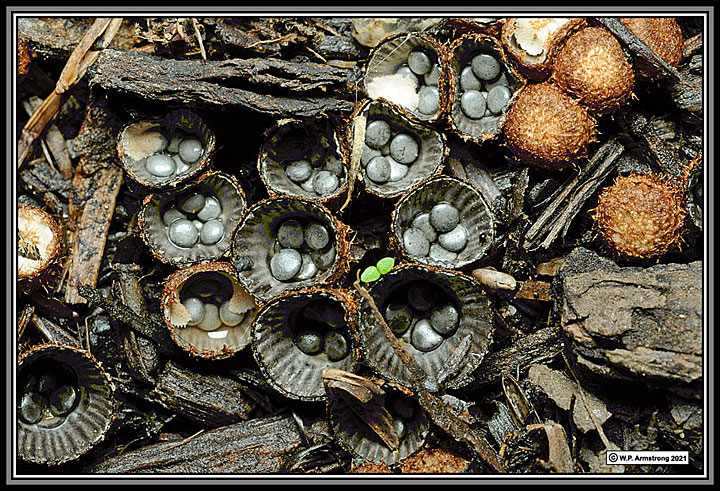
|
This particular species of bird's-nest fungus appears to be Cyathus striatus. When I first saw these small brown balls (upper right in above image) in our Camelia Garden in Twin Oaks Valley (San Marcos, CA) I thought they were rabbit droppings. After searching for their ID, I finally realized they are a different species of bird's-nest fungus. This species is easily recognized by radiating striations (flutted ridges) on the inner cup (peridium). Another species (Cyathis olla) grows in the shade under shrubs in the coastal sage scrub at Palomar College. It only appears after spring rains. Bird's-nest fungi belong to the fungal family Nidulariaceae. Members of this family contain both haploid and diploid stages, typical of the fungal division Basidiomycota in the kingdom Fungi, Domain Eukarya. Like other wood-decay fungi, this life cycle may be considered as two functionally different phases: the vegetative stage for the spread of mycelia, and the reproductive stage for the establishment of spore-producing structures, the fruiting bodies. These are the cup-shaped structures (peridia) resembling a bird's nest containing spore-bearing peridoles resembling tiny, flattened (lenticular) eggs. |
|
|
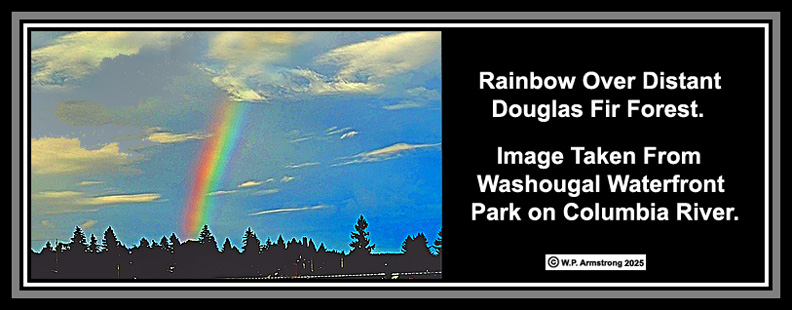
| Photographed taken with Sony DSC-HX60 near Washougal Waterfront Park on a cloudy afternoon. It was enhanced with Photoshop to bring out color spectrum (original rainbow was very faint). |

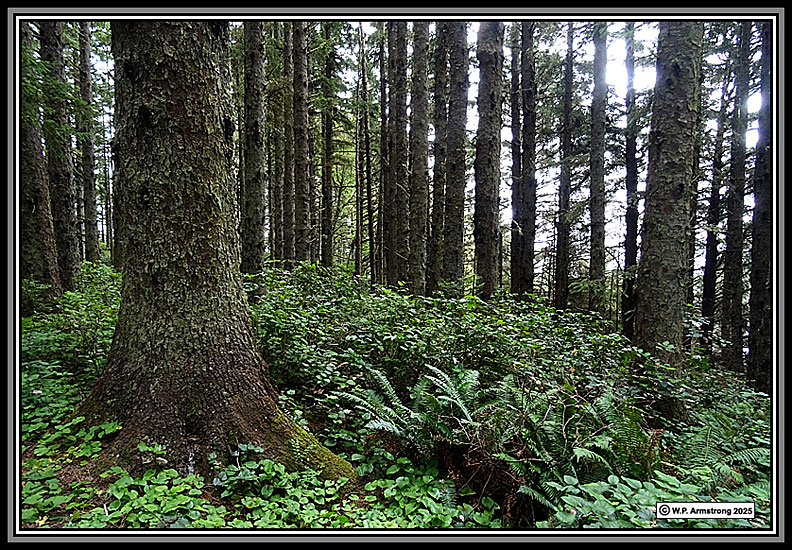
| The conifer forests around Camas & Portland are dominated by dense stands of Douglas fir (Pseudotsuga menziesii). This stand of sitka spruce (Picea sitchensis) was photographed very close to the Oregon coast along trail to Cape Meares Lighthouse. |
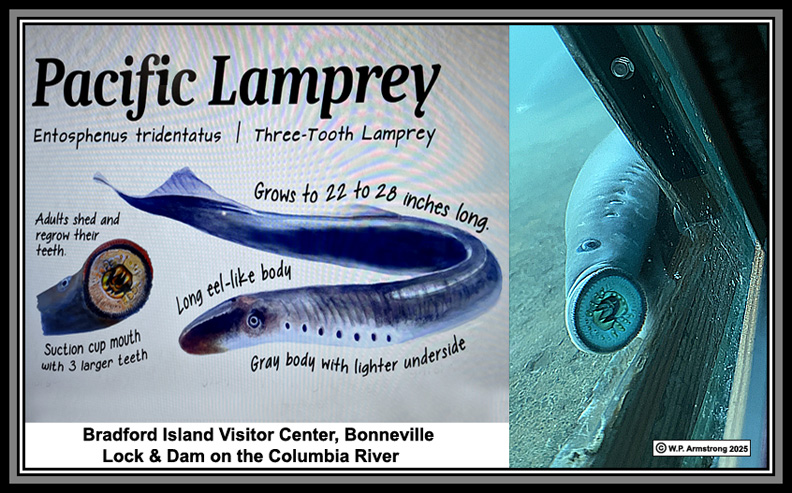
| A remarkable blood-sucking, parasitic fish. Like the salmon it is anadromous, meaning it migrates up rivers from the sea to spawn. It has been called "vampire fish." |
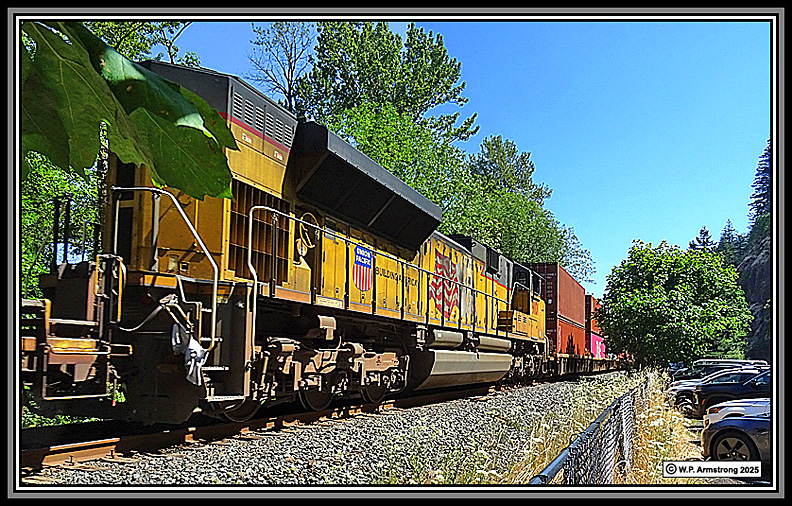
| This massive Union Pacific train was really moving fast by the parking area. This is one frame of "continuous shooting" setting with Sony DSC-HX60. |
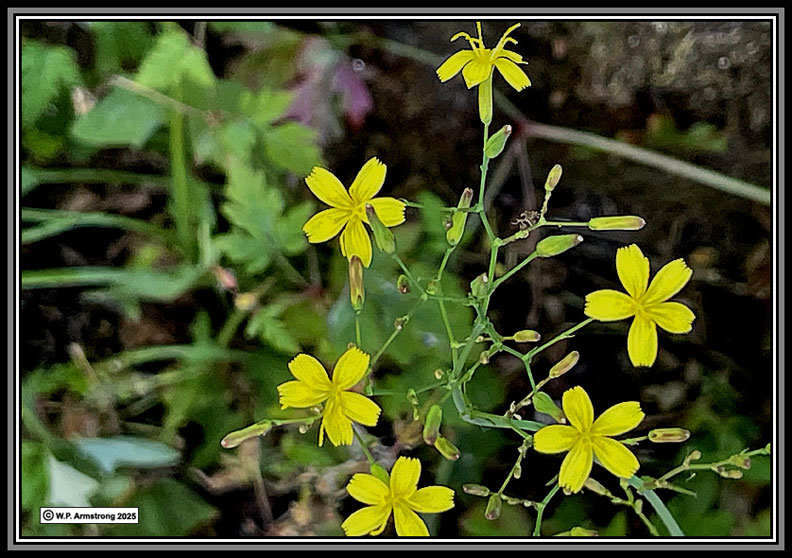
| I identified this European wildflower with Google AI Photo ID. It is Lactuca muralis with the unusual common name of "wall lettuce." Surprisingly enough it belongs to the same genus (Lactuca) as lettuce, although some references place it in the genus Mycelis. In fact, young leaves & shoots can apparently be used in salads! |
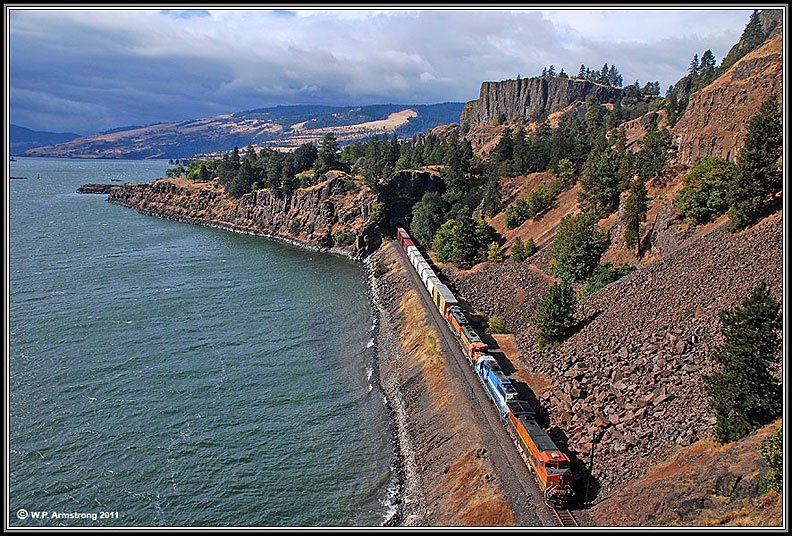
| Both sides of the Columbia River Gorge are great places to watch & photograph freight trains. I took this image in 2011 on my way home from Glendive, Montana. |
|
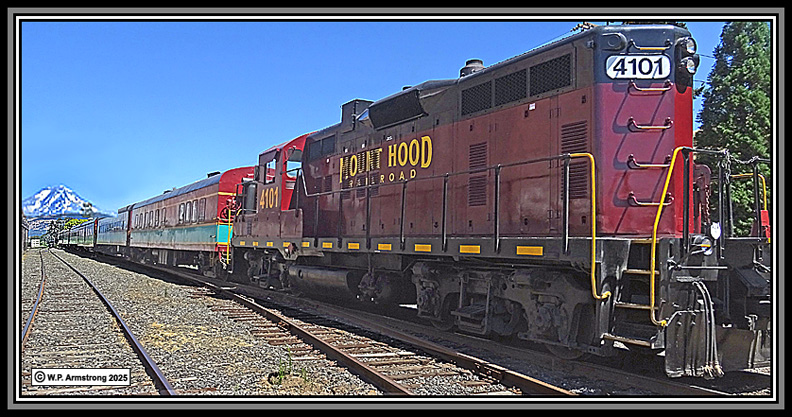
Mount Hood Train With Mt. Adams in Distance.
|
|
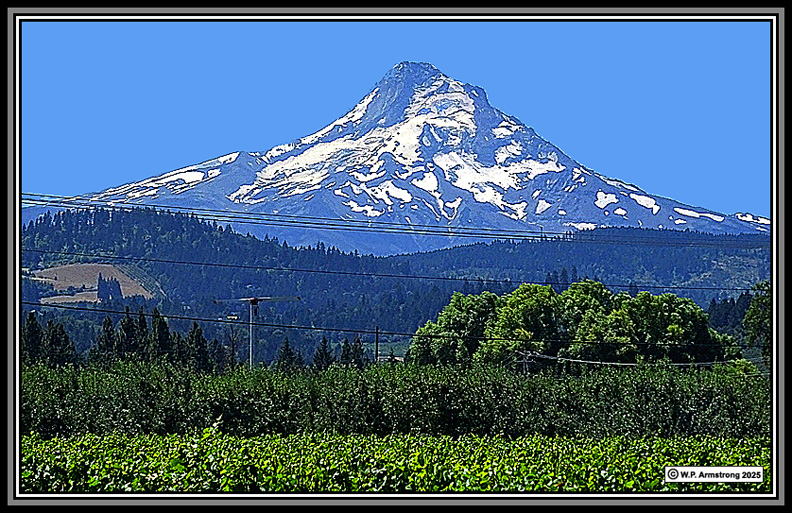
Mount Hood from The Fruit Company Orchards of Hood River Valley, Oregon.
|
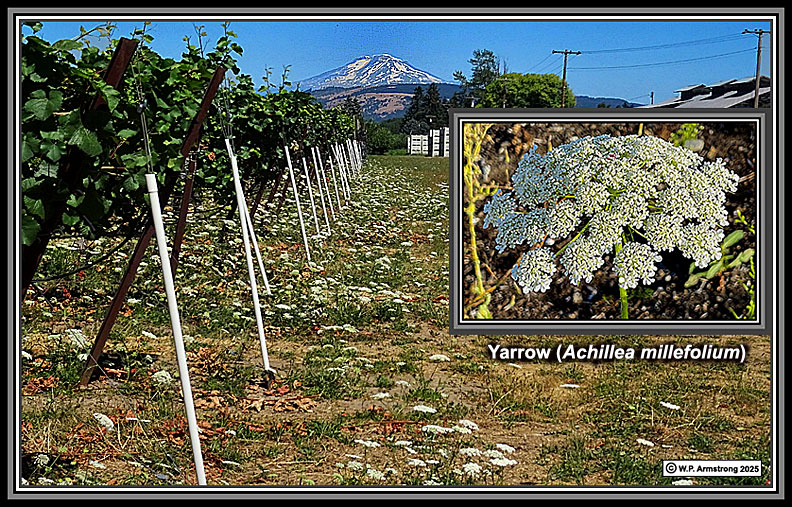
|
Yarrow (Achillea millefolium) in Hood River Valley, with Mt. Hood in distance.
|
|
Without a doubt, this was the most abundant and widespread of all the wildflowers encountered on this trip. We found it in full bloom every place we went, especially along roadsides. It also occurs in San Diego County. In fact, it is one of the most widespread wildflowers on our planet. Yarrow is native throughout the northern hemisphere in Asia, Europe and North America, from sea level to alpine elevations of 11,500 ft. It is also naturalized in the southern hemisphere, and was introduced as food for livestock in Australia and New Zealand. The generic name "Achillea" is derived from Achilles, the mythological Greek warrior of the legendary Trojan War made famous in Homer's two epic poems, the Illiad and the Odyssey. While rooted in myth, archaeological evidence at the site of Troy in modern-day Turkey indicates the possibility of a historical conflict. |
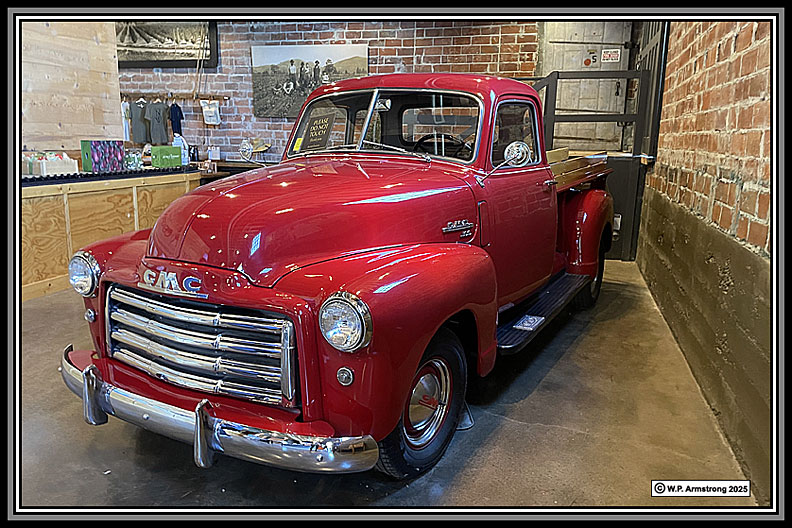
|
Immaculate 1949 GMC Pickup Truck!
|
 |
Athough I restored a 1948 Ford Convertible while attending Arcadia High School, this classic GMC was the truck of my dreams! |
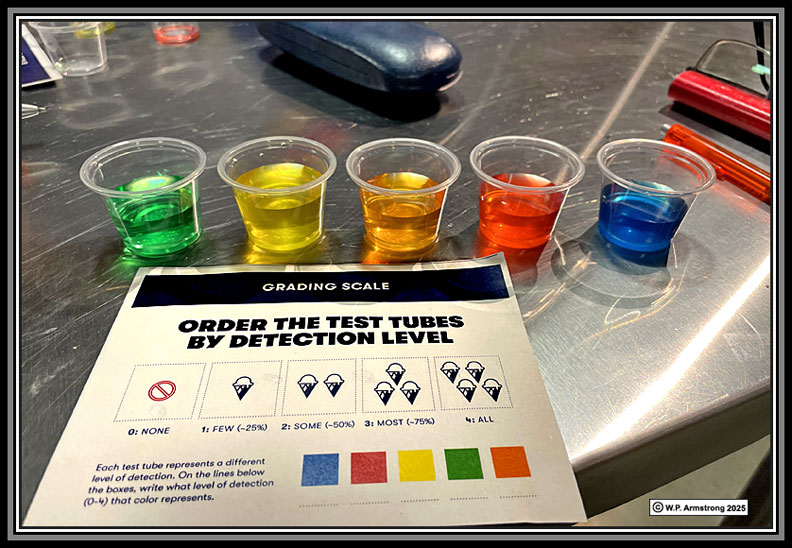
|
Test Tubes at Tillamook Taste Bud Lab.
|
| Taste test at Tillamook Taste Bud Laboratory in Tillamook, Oregon. Colored test tubes are placed in order from left to right: Green--0 Taste to strongest taste level of Blue--5. Does my honorary title of "Dominant Super-Taster" qualify me for pretigious job of "Official Ice Cream Taster" at Tillamook Cheese & Ice Cream Factory! |

|
Tasting Tillamook Ice Cream at San Marcos Farms Residence
|
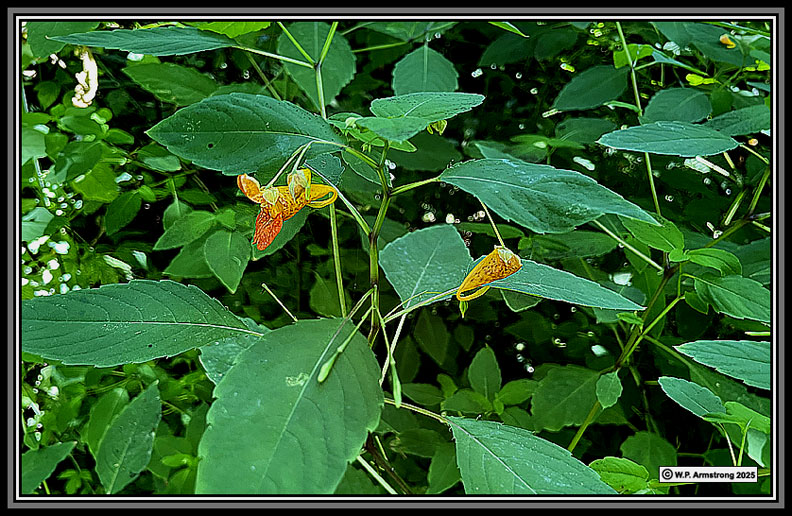
| Orange Jewelweed (Impatiens capensis): Native wildflower in balsam family (Balsaminaceae). Its range extends across the eastern two-thirds of the U.S. and much of Canada. There are also disjunct populations in Colorado, Oregon, Washington and Idaho. Identified with Google AI Photo ID. |
