|
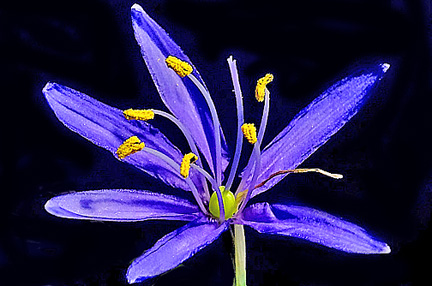
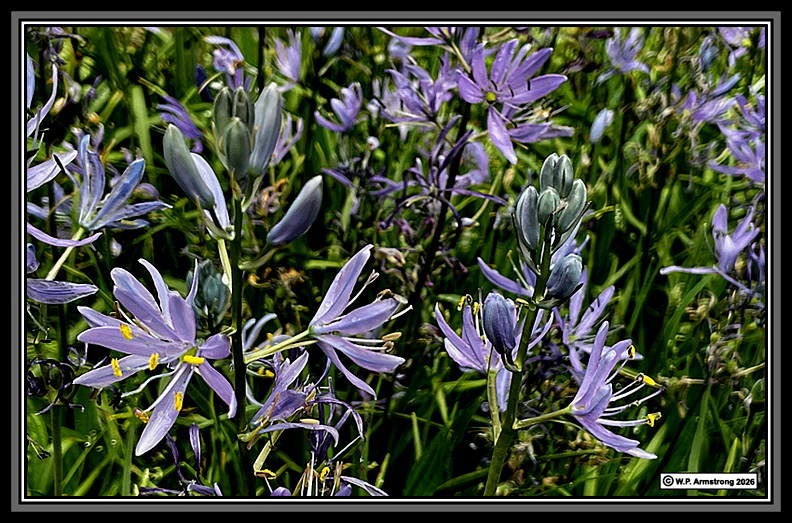
| The lovely town of Camas is named after the "Camas Lily" (Camassia quamash), a beautiful blue wildflower of the Pacific northwest. Camas bulbs were an important food source for many Native American tribes. These bulbs, which could be used as a vegetable or in bread, often saved tribes from starvation. They are very important plants in the history of this region, including the Lewis & Clark expedition. For more information please visit Camas Page 1 at above URL. |
| The following images were taken on Alaska Airlines flight to Portland, Oregon and tour of Columbia River Gorge region conducted by Alcantar Travel during May 1-7, 2026. Cameras Used In These Images: Sony DSC-HX60 & iPhone 12. Most of the images on this page were enhanced with photoshop. I took over 600 images, including numerous wildflowers in full bloom and visits to Pendleton Woolen Mills, Washougal, WA; Vancouver National Historic Site; Oregon Museum of Science & Industry (AMSI); Oregon Rail Heritage Center; Portland Spirit Cruise on Willamette River; Portland Zoo; and Exploring Cape Horn trail on WA side of Columbia River. Special thanks to our tour guides Zach & Sarah, and to Mr. Buckleman (Gavin) for securely fastening my seat belt during this fascinating trip! In fact, I am dedicating this page to Mr. Buckleman. |
|
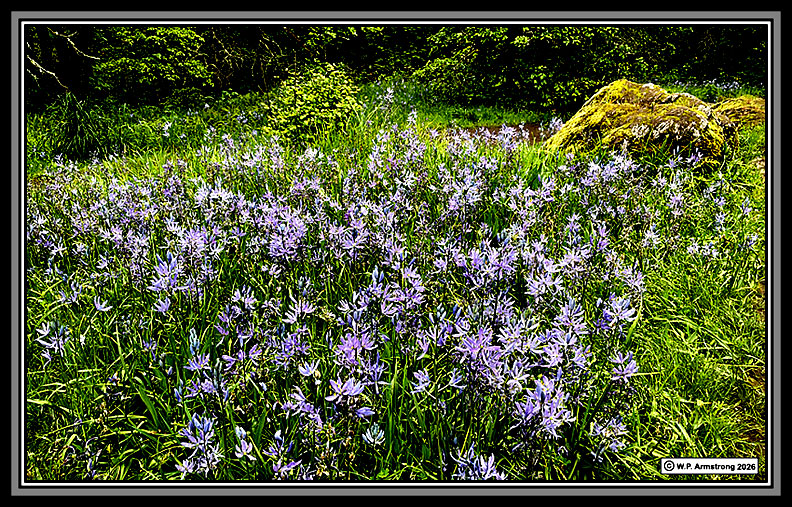
Camas (Camassia quamash) in meadow above Lacamas Creek.
|
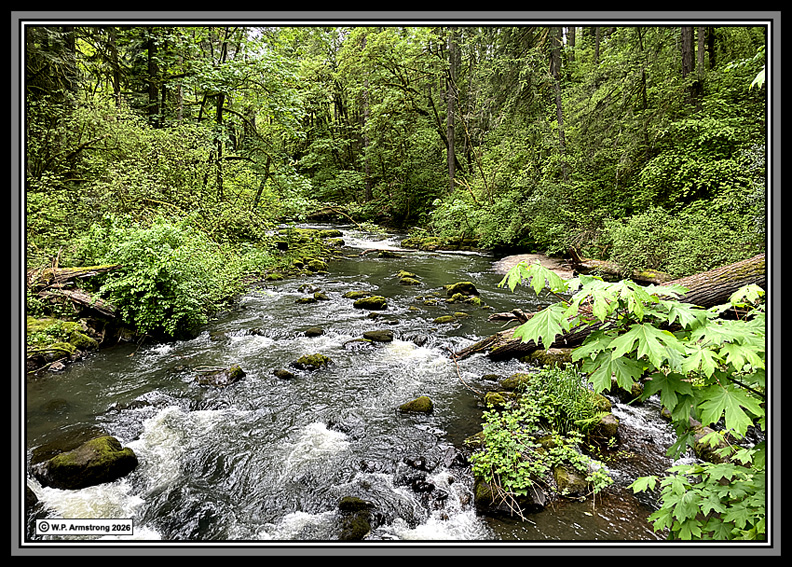
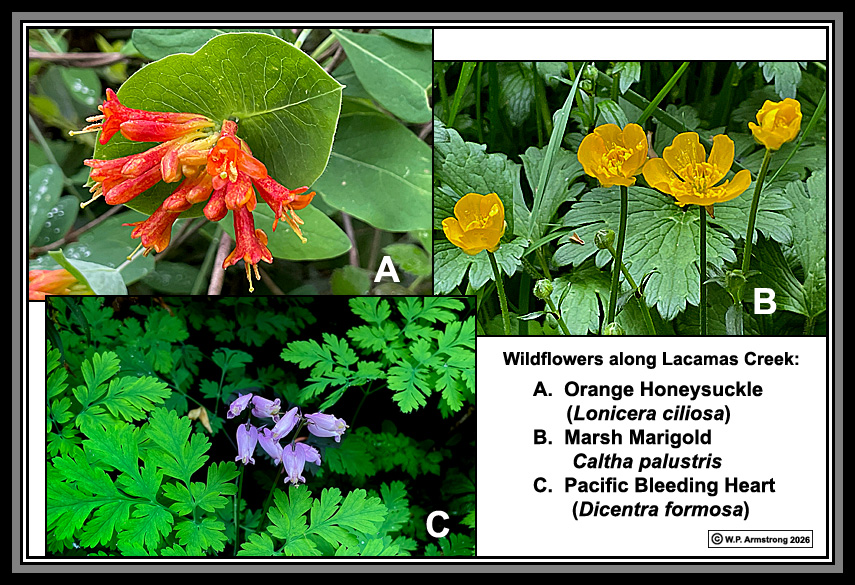
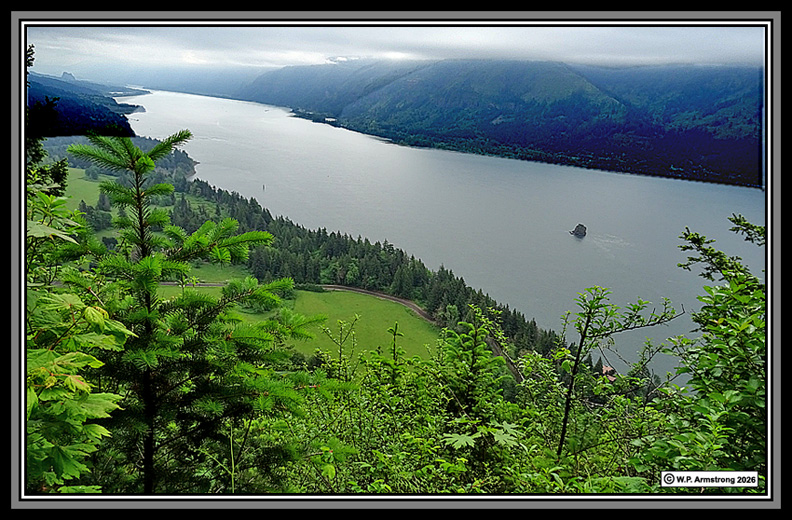
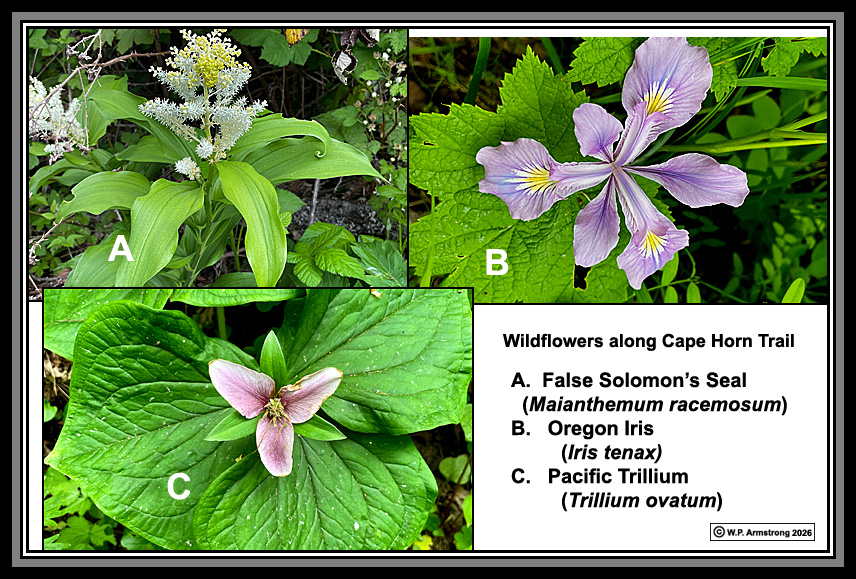
| I photographed at least 100 wildflower species on this marvelous trip; however, I typically do not post my images without precise identifications, a very time-consuming process. Therefore, I am only posting a few flower images at this time from Lacamas Creek & Cape Horn Trails, both with a few Californa comparison species. |
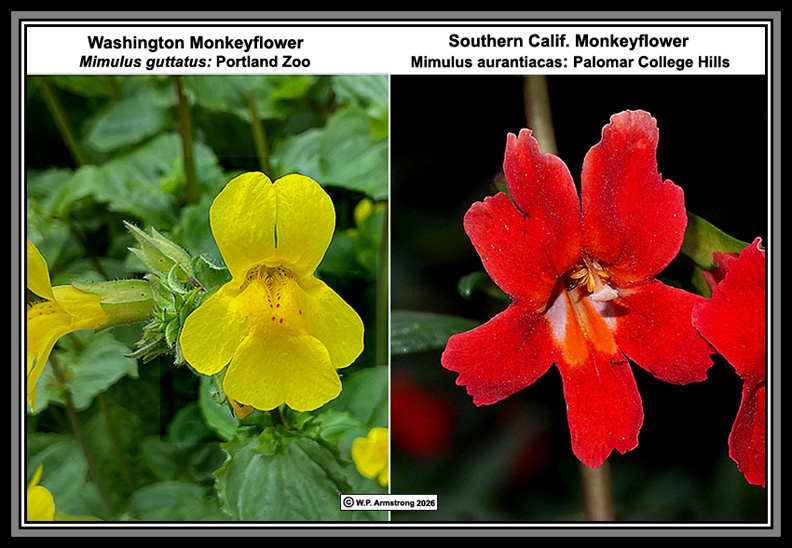
| The Jepson Flora of California describes over 100 species of monkeyflowers in the genera Mimulus (herbaceous) and Diplacus (shrubby). In fact, the red California species in following image is now classified as Diplacus aurantiacus rather than Mimulus aurantiacus. Older references still include shrubby (woody) Diplacus species under the genus Mimulus. After teaching Botany & Plant ID at Palomar College for 40 years, I still do not see the resemblance of a monkey face in monkeyflowers! |
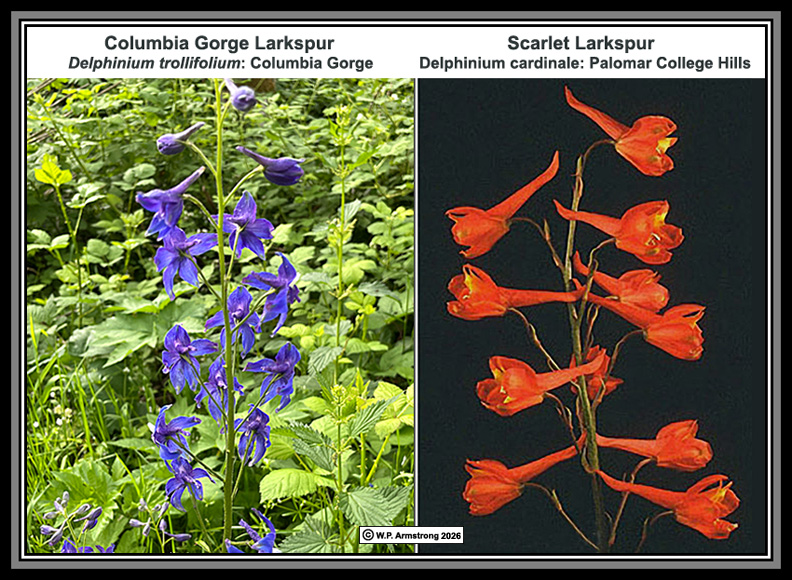
| The Jepson Flora of California describes over 30 species of larkspurs in the genus Delphinium with numerous subspecies. The beautiful Columbia River Larkspur (Delphinium trollifolium) also occurs in northern coastal California.. There are also a number of hybrids between species. |
|
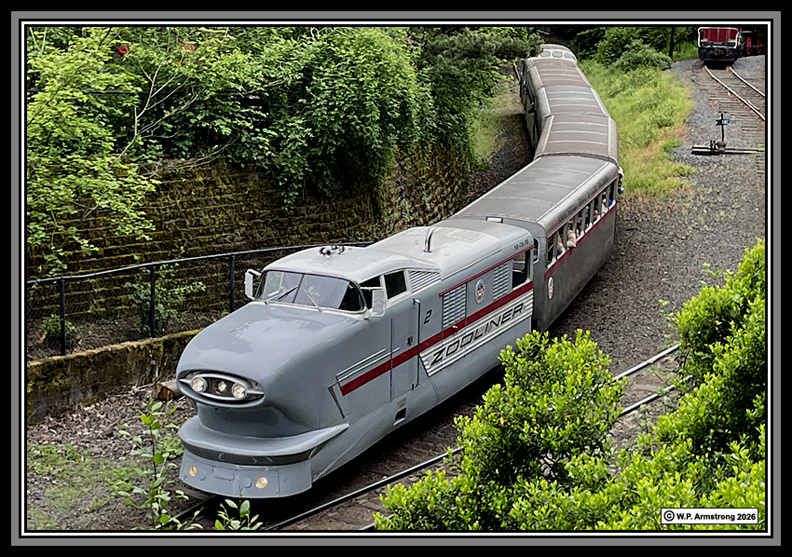
Narrow gauge Portland Zoo Train
|
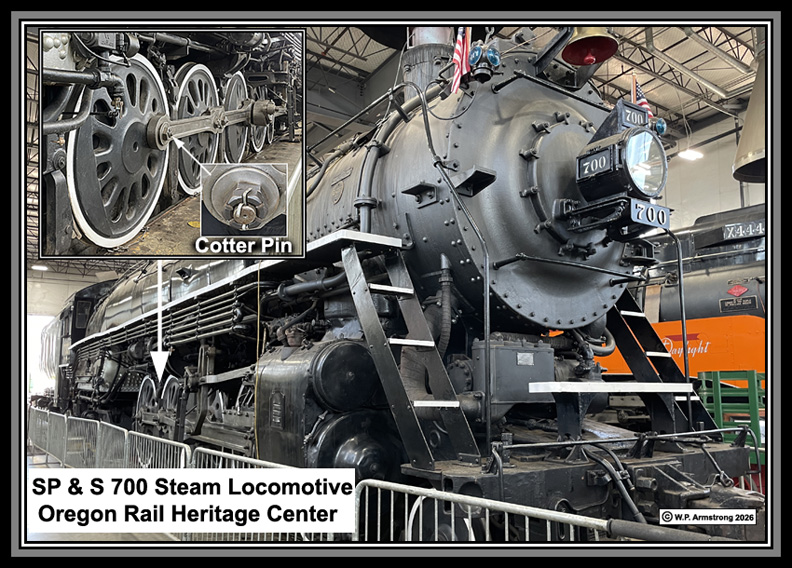
| Huge 440 ton steam engine at Portland Train Museum. I thought cotter pin on massive wheels 6 feet in diameter was interesting! |
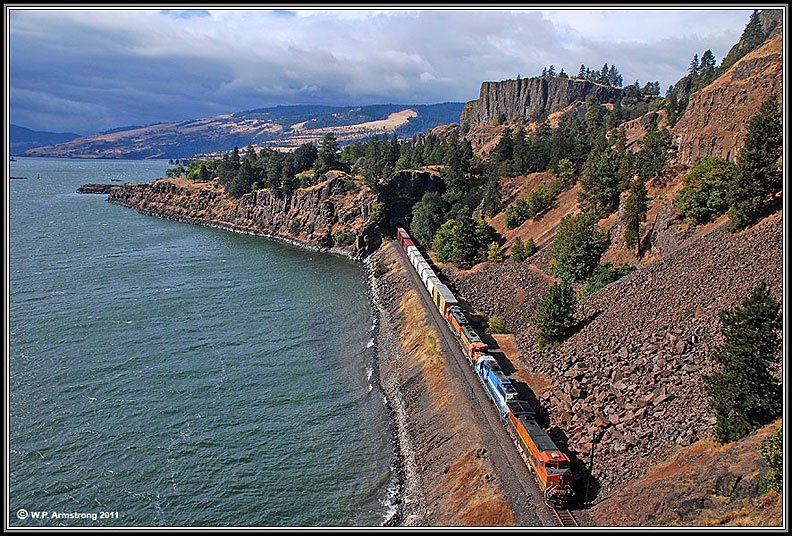
| Both sides of the Columbia River Gorge are great places to watch & photograph freight trains. I took this image in 2011 on my way home from Glendive, Montana. |

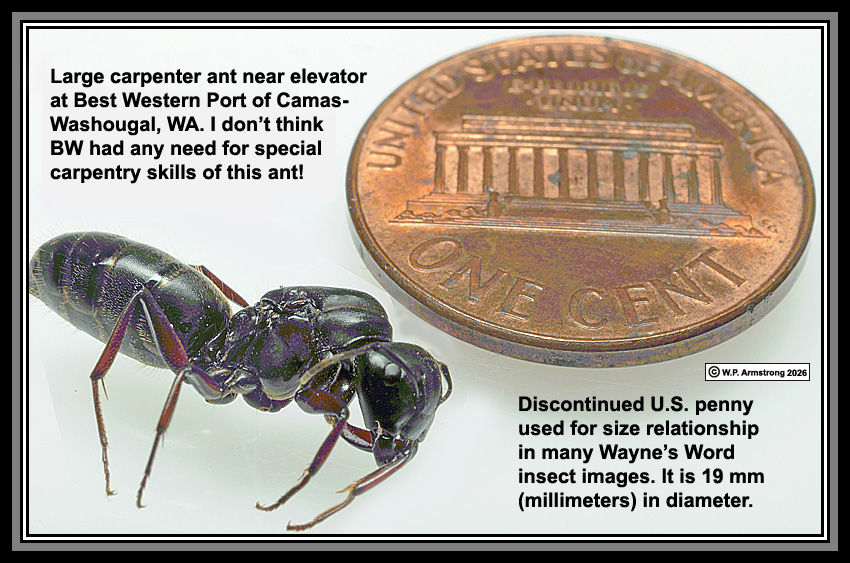
| I did not ID the species of this carpenter ant (genus Camponotus). There are more than 1,500 described species worldwide. C. modoc with reddish legs is very common in the Pacific Northwest. Although they don't actually eat wood like symbiotic wood-digesting bacteria in the gut of termites; however, their extensive excavations for nest building can damage the structural integrity of wood frame houses. These omnivorous scavengers forage for a variety of protein & carbohydrate foods, including honeydew, nectar & insects. They are technically not seed harvesters like stinging red harvester ants & fire ants. The thick thorax & lateral wing scars indicate this is a wingless queen. In fact, she may have been searching for a suitable nesting site to lay her eggs at Best Western. |